Our Story.
“In December of 2016, Caitlin O’Hara died. She was thirty-three years old and my best friend. When I spoke at her funeraI, I promised that I would do something extraordinary. I promised that I would make her proud and I promised to keep her light and her spirit alive. Because of my own health situation, it took time to put everything together but - despite delay - I am proud to introduce The Leo Project in honor of Caitlin O’Hara.”
— Jess Danforth, Founder and Executive Director
How it all began.
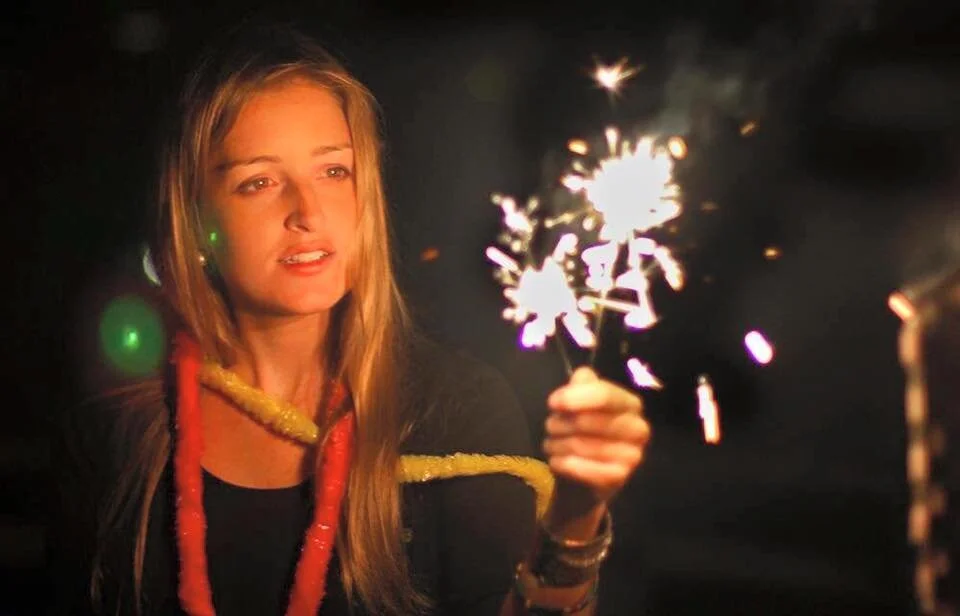
In February of 2013, I left my job in finance and moved to Nanyuki, which is located three hours north of Nairobi, Kenya's capital city. I lived there for two years.
Beryl Markham said, “Africa is mystic; it is wild; it is a sweltering inferno; it is a photographer’s paradise, a hunter’s Valhalla, an escapist’s Utopia. It is what you will, and it withstands all interpretations. It is the last vestige of a dead world or the cradle of a shiny new one. To a lot of people, as to myself, it is just ‘home.’ It is all these things but one thing - it is never dull.”
Caitlin, my best friend, longed to visit me here and meet the kids. To see, with her own eyes, the big cats, the elephants, and watch the equatorial sun rise up over Mt. Kenya. She dreamed of seeing the endless night sky, pinpricked with silvery stars. She was an adventurer at heart but she had cystic fibrosis, a genetic, progressive lung disease, and by her twenties, she could no longer stray too far from her medical team. In February of 2014, her health plummeted. She was transferred by med-flight from Brigham & Women’s in Boston to the University of Pittsburgh Medical Center (UPMC) where she was listed for a lung transplant. The surgery was filled with uncertainty and side effects, but if successful – like so many were – it would provide her with the opportunity to do many of the things that, before this time, had never been an option. She would finally be able to travel to Kenya.
For many tragic reasons, Caitlin had to wait 2.5 years for her transplant and by then, her chances of success were low. She did not survive.
Why The Leo Project?
Caitlin loved the arts and children, and always advocated for creativity. She was an art history major, partial to the Northern Renaissance and Early Christian periods, and saw the arts as essential not only to education but to public health — a belief shaped by her own experiences living with the genetic lung disease cystic fibrosis. She excelled at graphic design and taught herself basic coding. She painted and sketched and was a brilliant writer. From Joni Mitchell to the Talking Heads, she appreciated good music more than anyone. Many of the services offered at The Leo Project provide the creative outlets that sustained and enriched her life.
And while creativity was central to who she was, so too was her firsthand understanding of what it means to navigate illness and inequity. Throughout her life, Caitlin observed inequities in health care, but she lived them during her long and uncertain wait for a lung transplant. That experience changed her. After her transplant, she hoped to help others facing similar barriers. She planned to pursue a Master of Public Health to help build the kind of compassionate, equitable care she knew was possible.
Caitlin believed deeply in creativity as a force for healing and in compassionate, human-centered health care as a force for justice. The Leo Project carries these values forward in her honor — expanding access to equitable medical care while also creating the creative and educational opportunities that sustained her spirit.
What is Behind the Name?
In Swahili, Leo means today. Being an astrological Leo was part of what defined Caitlin. She was a lion, as fiery and courageous as they come and she taught us, more than anyone, that all we have is today. Additionally, Caitlin and I met as fifteen-year old students while attending St. Mark’s School and will forever be lions, the St. Mark’s mascot.
Our Vision.
We believe that access to education and healthcare are universal human rights. The Leo Project recognizes that birthplace, socioeconomic status, and gender often dictate one’s ability to realize these rights. The Leo Project pilots, implements, and sustains programs as a means to unite, empower, and - most importantly - drive social change. We believe in grassroots initiatives, sustainable impact, community-driven efforts, and addressing the root causes of social issues.