The Doctor Everyone Deserves: Patient-Centered Care with Dr. Ahmet Uluer
When you sit with Dr. Ahmet Uluer, you notice certain things immediately: his warmth, his humility — the way he makes you feel fully seen.
Jess Danforth, Founder and Executive Director of The Leo Project, came to know him through Caitlin O’Hara, who was her best friend and the inspiration behind The Leo Project. Ahmet was Caitlin’s most beloved physician, someone she could count on and contact at any time of day when the disease she lived with, cystic fibrosis, presented another challenge.
“Caitlin was one of the people who taught me how to be a better physician,” he said. “She asked such incredible questions — questions that demanded thoughtful and appropriate answers.”
For Jess, who has survived breast cancer twice, that level of care is rare and deeply appreciated. She told Ahmet that the way he cared for Caitlin had been a model for the kind of patient–caregiver relationships at the heart of our work in Kenya today.
“There are very few people like you,” she said.
Formed by Family and by Patients
Ahmet grew up between Buffalo and Istanbul, shaped by a family that valued humility and kindness and by a childhood that exposed him to varied perspectives. His father was a community physician. His mother, who grew up in poverty, taught her children simple rules: Everyone is equal. Be kind. Be grateful.
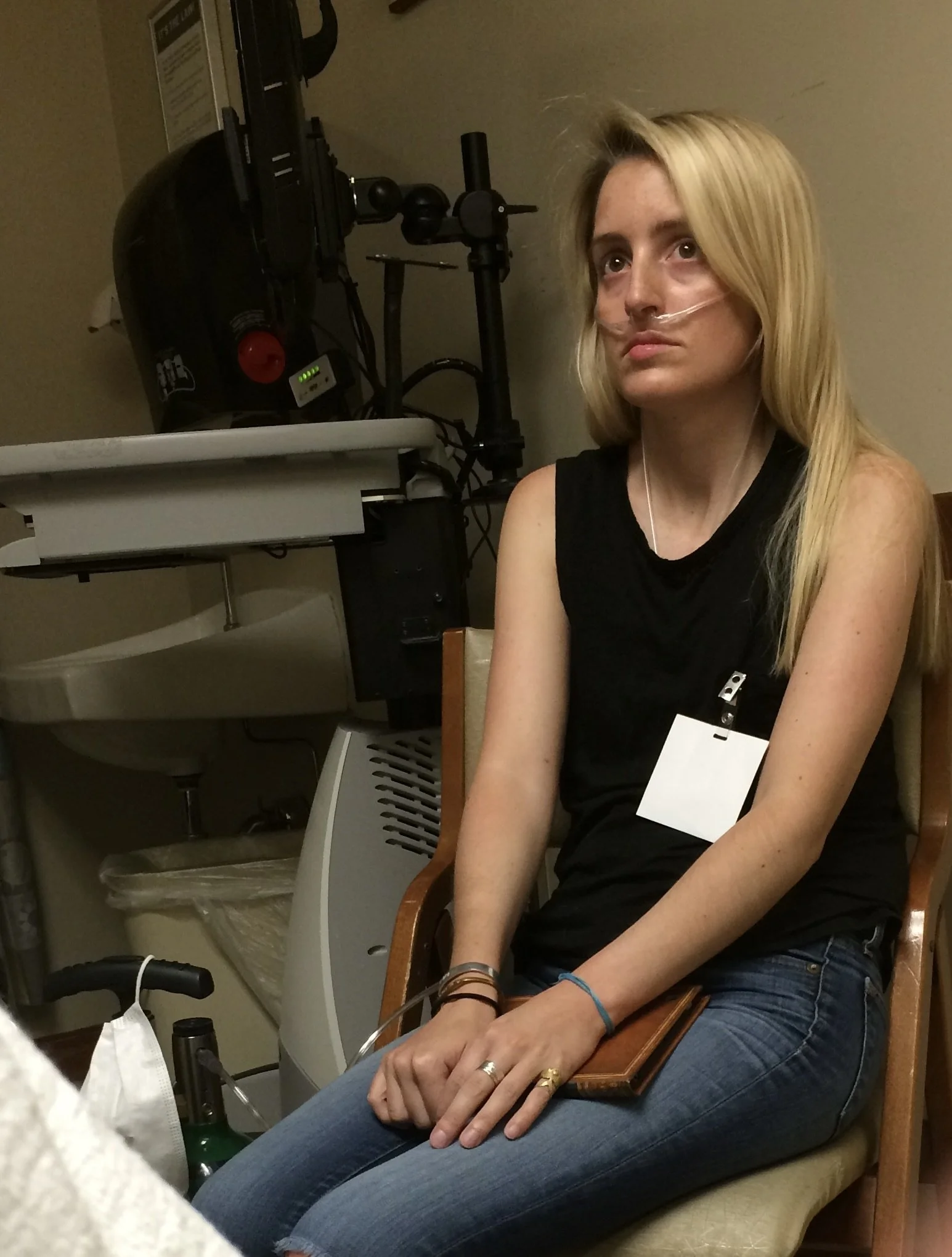
Caitlin O’Hara
“It’s the patients who teach you how to listen,” he said, recalling that as a medical student, he once removed a chest tube for a man recovering from a lung transplant. The man, like Caitlin, had the genetic lung disease, cystic fibrosis. Ahmet stayed talking with the man for nearly an hour. “He pulled me into that chronic-illness life.”
That kind of bedside manner can be learned and strengthened, he believes. “There is training that you can do.”
For Jess, what stands out most is not just Dr. Uluer’s kindness, but the way he gives patients space — space to ask questions, to seek clarity, and to participate in their own care.
“Something I learned from Caitlin was the importance of understanding your medical history and having a clinical team where you can ask questions,” Jess said. “A team that does not feel threatened by your curiosity.”
Caitlin had that with Ahmet. She could email him with her worries, her questions, her research. He took everything she brought to him seriously.
In 2016, when Jess and Caitlin were both navigating their most serious periods of illness, they often emailed each other the fears they were too scared to say aloud. Caitlin could share some of those fears with Dr. Uluer as well, trusting that he would listen.
“In a way, Caitlin also trained me,” he said. “When patients know so much about themselves, we have to listen. That is how we help them feel better — and how we become better doctors.”
This belief––that patients should understand their own health, ask questions, and participate in decisions — is one of the core values shaping care at The Caitlin O’Hara Community Health Clinic. It’s why our staff invite questions, explain diagnoses clearly, and encourage people to advocate for themselves.
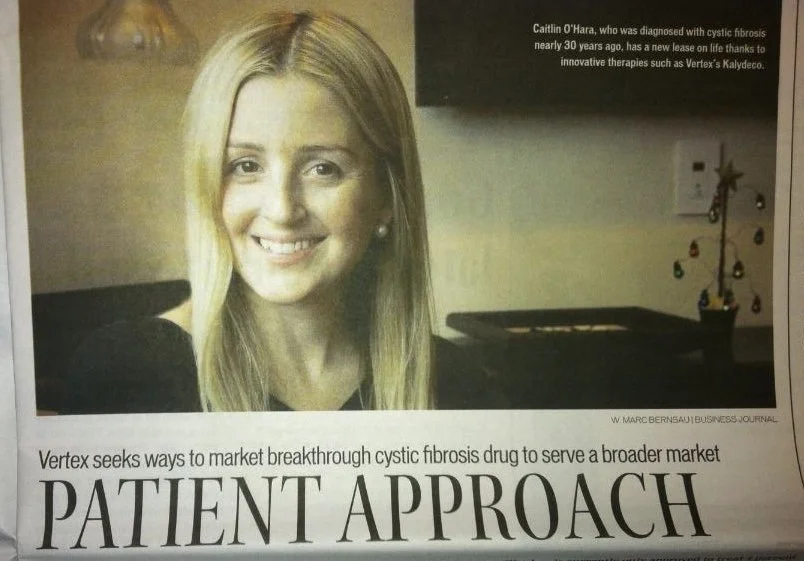
Caitlin O’Hara, photographed during a press interview about breakthroughs in cystic fibrosis treatment. Dr. Uluer often asked Caitlin to share her perspective, believing that patients should be active voices in shaping care.
A Team Without Hierarchy
Ahmet also spoke about the importance of teams without rigid hierarchy.
“Our dietitian, our social worker, everyone has an equal voice, and we all learn from one another,” he said. “That is the kind of team you are setting up here, I can tell. And that is the kind of team that is needed.”
We couldn’t agree more. At the The Caitlin O’Hara Community Health Clinic, nurses, clinical officers, counselors, lab technicians, community health workers, and administrators all contribute to decisions, each voice valued.
From Boston to Nanyuki
Ahmet’s work extends beyond Boston. He has helped build cystic fibrosis programs, trained the next generation of CF providers, and worked in places such as Jordan and Türkiye. That global perspective deepens his understanding of inequity, data gaps, and the need to organize communities and families so their voices can move health systems.
During his visit to The Leo Project, he saw familiar values in our team: commitment, curiosity, and compassion, even in a system where many patients cannot afford care and where data and resources are limited.
“We should be able to provide care and love and kindness and empathy to everybody,” he said. “When government and health systems do not provide that, it is so difficult for patients, and for the providers who want to help them.”
He added, “We cannot always experience what someone else is experiencing, so you have to have empathy. There are more things that are common among us than there are differences.”
In Nanyuki, he saw what it looks like to try anyway: to offer free, dignified care in a beautiful, well-kept clinic; to treat patients as partners, not problems; to track data even when systems are imperfect.
“Everyone Deserves the Kind of Care You Are Providing Here”
Ahmet reflected on what he had seen in Nanyuki — our staff, our patients, the environment we’re building, and the vision for an inpatient hospital.
“Everyone deserves the kind of care you are providing here,” he said. “This place shows what is possible.”
For all of us at The Leo Project, his presence felt quietly full circle. The doctor who once cared for Caitlin — and who learned from her — now stood in a clinic built in her honor, encouraging a team working to extend that same dignity to people she never met.
His example continues to guide our team: in the way we listen, in the way we welcome questions and fears, and in the way we see patients as partners in their own care. He reminded us that Caitlin’s legacy lives not only in memory, but in the daily work of offering thoughtful, equitable care.
We are deeply grateful for his insight, his kindness, and his belief in what becomes possible when medicine is grounded in humanity.