
The Missing Piece of Maternal Health: Men
“Men have been left out of conversations about health for the longest time, and it’s one reason why we have so many problems that we can't seem to get rid of,” says Paul Njogu, Medical Psychologist at The Leo Project (TLP). As the impetus for so many of our community-based programs, that realization sparked a question for the TLP team: What would happen if men were finally invited to the conversation?
Over the course of two months, 18 men from 10 villages across rural Kenya – many of whom had never before openly discussed emotions, pregnancy, or fatherhood – came together to do exactly that. TLP’s inaugural Group Mental Health for Fathers course gave men a space to discuss their role as men and fathers in a woman’s perinatal experience and in a child’s development.
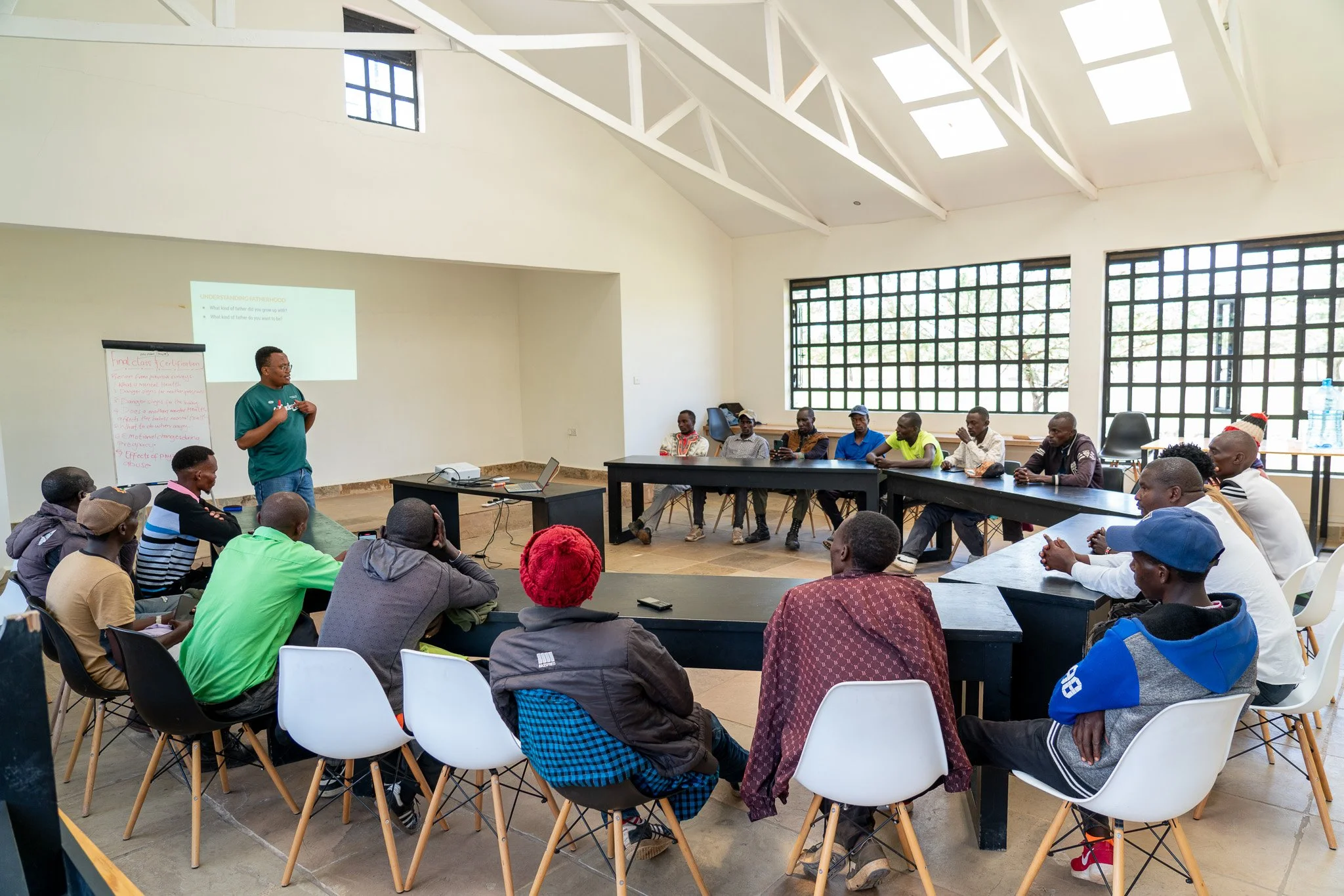
Paul leads a discussion with the group
Convenings like this are rare here, where deeply rooted expectations around masculinity and gender roles mean that many many men grow up believing their primary responsibility is to be an authoritative figure in their household. These beliefs can perpetuate cycles of harm across generations, and can negatively impact the health of women and children. This course was designed to explore these issues, “not by demonizing, but first trying to understand why this is the way it is,” as Paul explained.
We built this course as part of our broader work around perinatal mental health and newborn thriving, supported by the Stavros Niarchos Foundation (SNF), because it has become clear that when men are engaged as educated partners, women have safer pregnancies and children have a stronger start in life. Engaged fathers are linked to better social and emotional development in their children, and reducing household stress and conflict has been shown to decrease depression, anxiety and pregnancy complications for women.
We were unsure how the men would respond to this program, but from the very first session, the atmosphere was one of openness and support. While laughing over tea and chapati, the men built trust with one another, asked vulnerable questions, and opened their minds to new information and ideas. The men were eager to learn and remarkably open to the conversations, and, by the end of the first session, some told us that“this information should be heard by everybody.”
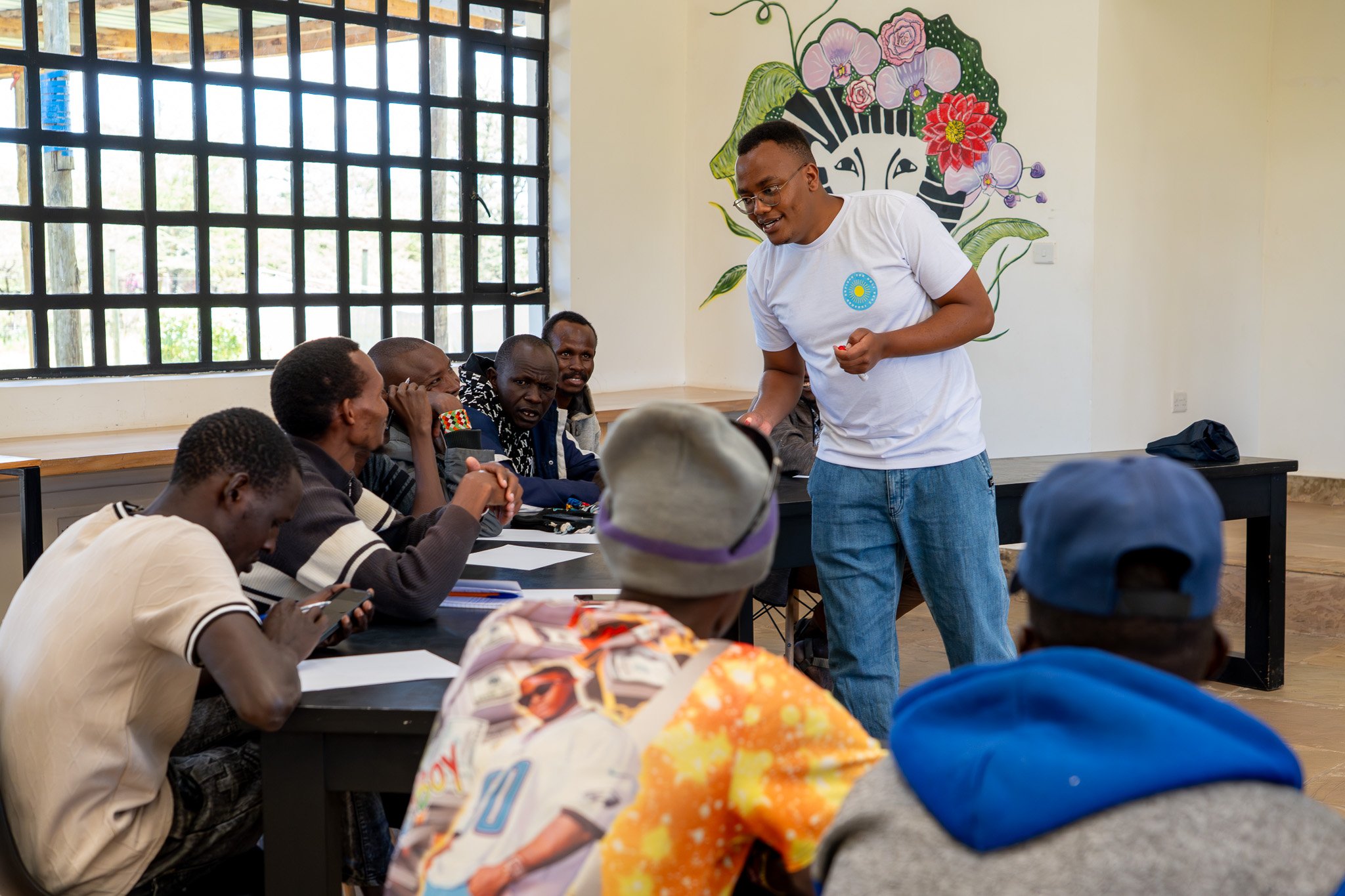
Paul with men in the program
One theme emerged repeatedly throughout the course. Many of the participants described feeling frustrated, disrespected, or ashamed, which they outwardly expressed as anger, sometimes in physically or verbally abusive ways. By the end of the course, participants were able to better identify those emotions. When asked to share one change they’d made in their behavior since the beginning of the program, 70% of participants identified better emotional regulation, including:
“I have reduced being rude and verbally abrasive to my wife.”
“I can calm myself better when angry and stressed.”
“I now call myself out before reacting to something.”
“I used to react without thinking, but now I pause before I do so.”
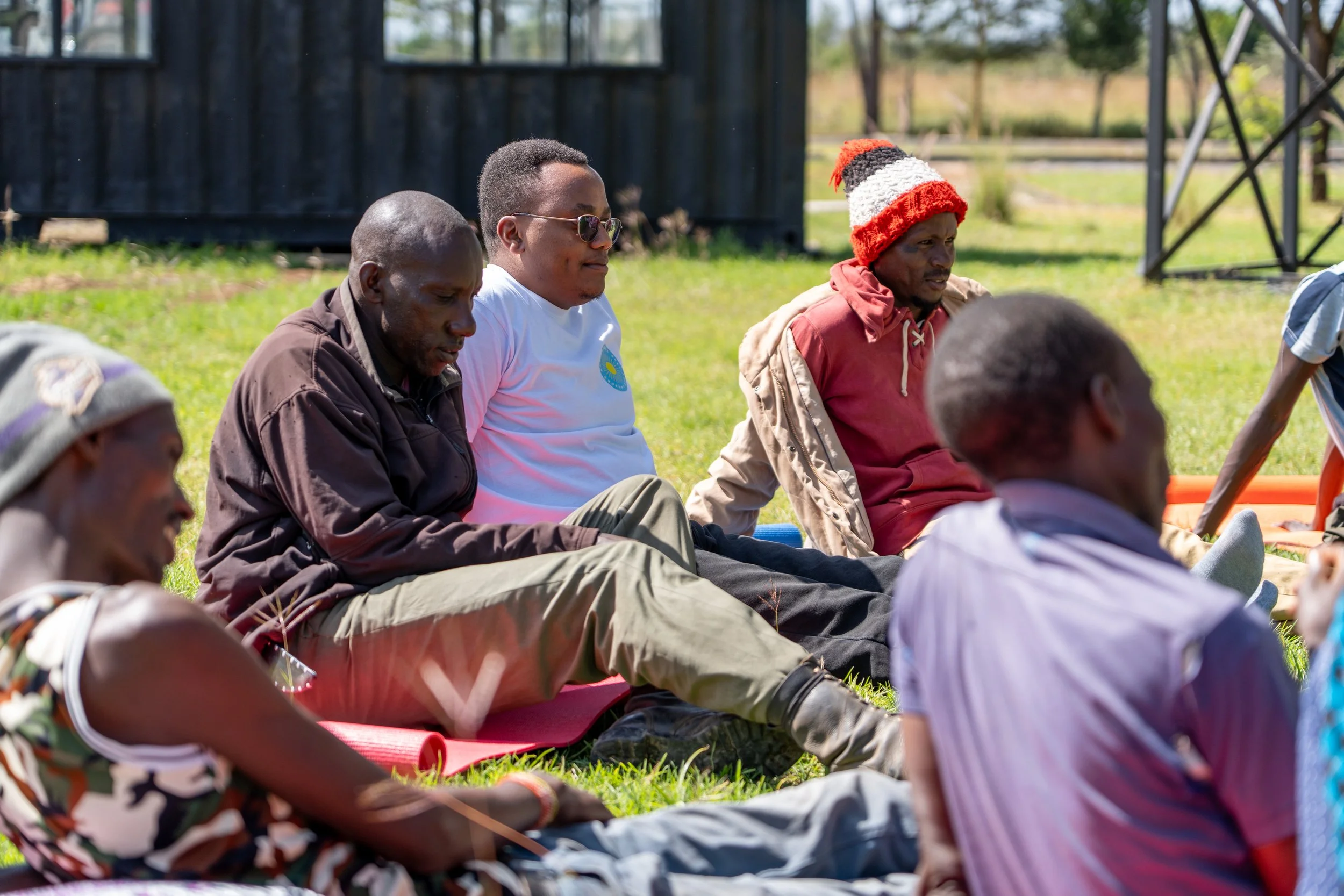
Program participants in conversation outside during on the of the sessions
“Most men lack the emotional vocabulary of explaining their emotions,” Paul says. “Most of the time when you're feeling angry, there's something beneath that. But men can't express that. It's not a masculine trait.” Those expectations around masculinity shape entire families. When boys are raised to suppress shame, fear, and even love, they often grow into fathers who struggle to express care and support.
Many men are taught to be distant with their children, Paul explains, because they believe “you can't express love or the children will disrespect you.” Before the program, only 28% of participants believed a father should begin bonding with a baby during pregnancy. By the end of the training, that figure had risen to 61%, while the number who believed bonding should wait until the child was older dropped from 50% to just 11%.
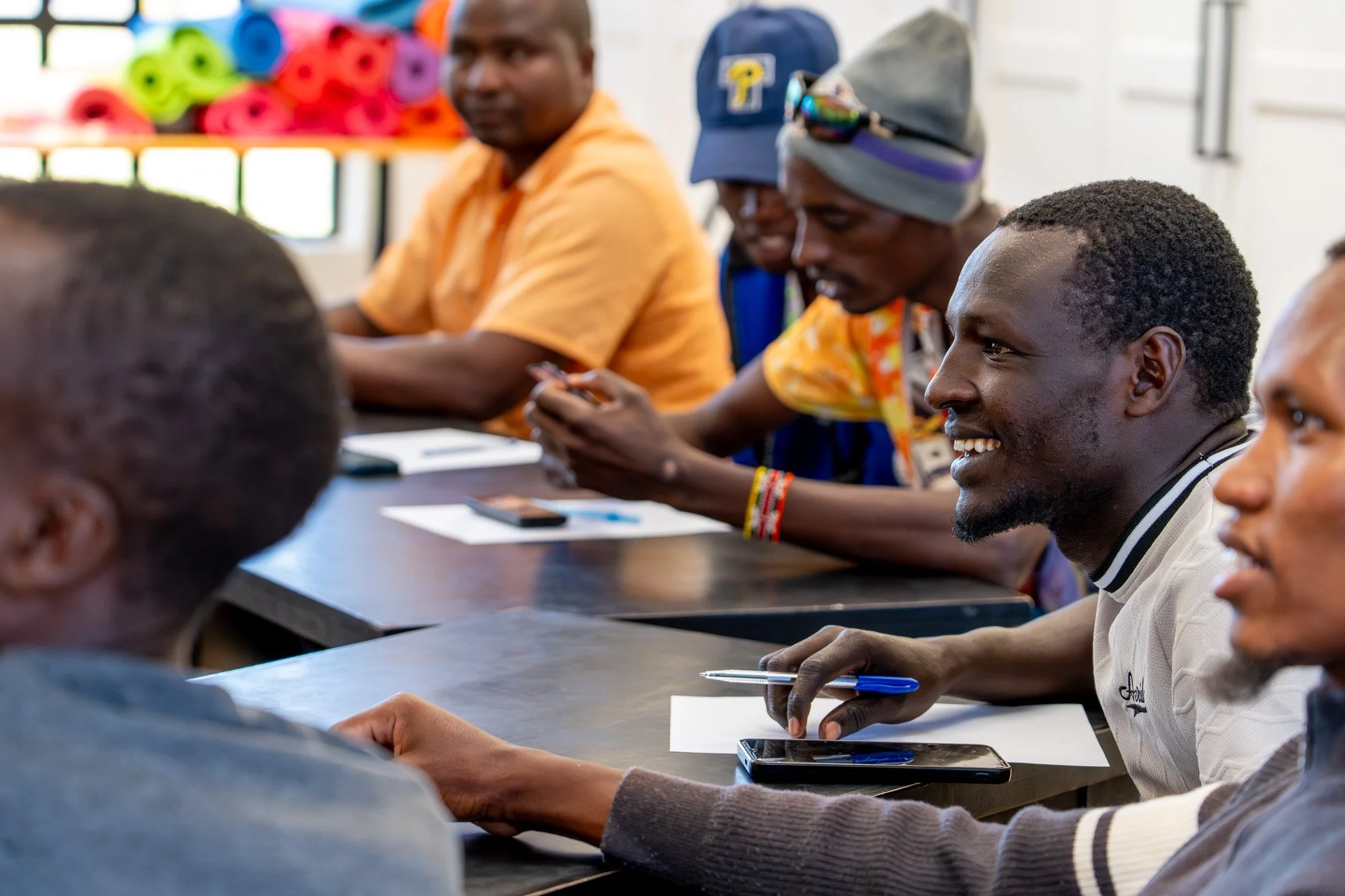
The course helped participants redefine what fatherhood looks like. Rather than seeing themselves solely as providers, many left with a broader understanding of their role as emotionally present partners and engaged parents. “Coming out of the course, they now understand that a father does more than just buy food,” Paul says. “They now understand, ‘I need to spend more time with my children. And my children must not fear me to respect me. Respect based on love lasts longer.’”
Our hope is that this shift will have a long-reaching impact not just on the 18 men who participated in the program, but on the women and children in their lives as well. Each participant graduated with new ways of communicating, managing conflict, and supporting their families. They built bonds with other men in the community that transcended traditional boundaries on male vulnerability and expression. Through our ongoing partnership with SNF, we will continue to convene men and fathers as a way to improve maternal health and child thriving.
To support The Leo Project, you can make a donation here.