A Trusted Voice for Mothers
In Mutirithia, a small farming and livestock village in northern Kenya with roughly 300 households, Kaisa Legei, 64, has been responding to calls from women in the middle of the night for more than two decades. As a Traditional Birth Companion (TBC) who has assisted in countless deliveries, Kaisa supports women in their homes, walks them to the local health center, and has become one of her community’s most trusted voices when it comes to maternal health. She was part of The Leo Project’s inaugural TBC training in 2024. Recently, we visited her at home.
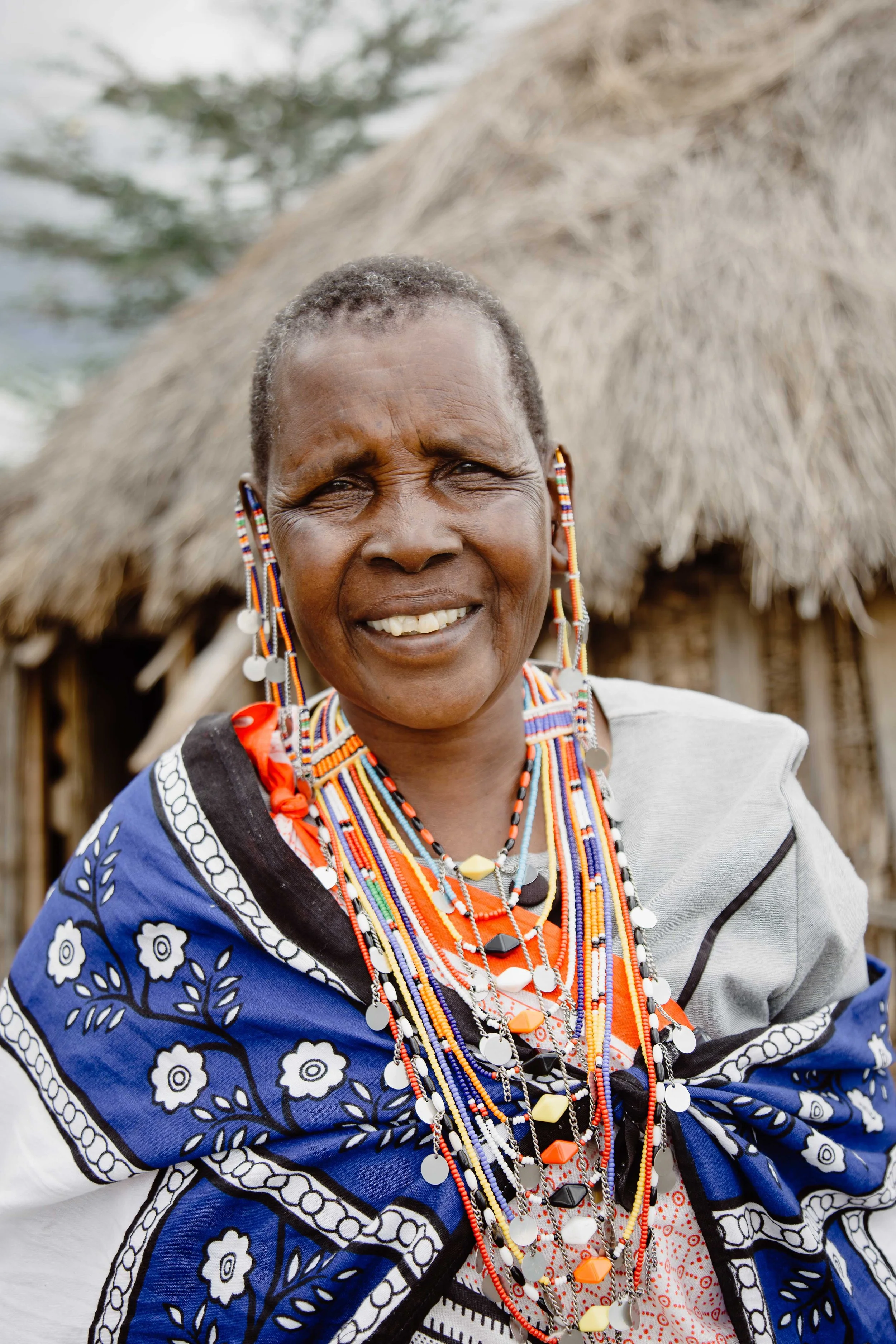
Kaisa admits she did not go into the training expecting to learn much; twenty years of experience had given her confidence. "I did not think there was anything else I could learn that was new," she shared. But the training surprised her by bringing together professionals from different fields, each sharing what they knew from their area of expertise. The training left her with a new perspective, as she told us: "Knowledge is not from one place. It comes from multiple sources."
Before the training, Kaisa was not fully aware of most danger signs in pregnancy and delivery. She did not know how to properly handle the placenta after birth, lacked personal protective equipment, and could not properly respond to postpartum bleeding, something she had seen women die from over the years. She helps women because she loves to, but prior to the training, she was working with gaps she did not know she had.
After the training, those gaps started to close. She now tells every woman she meets about the importance of attending antenatal care visits, and she has become an advocate for hospital delivery, understanding that complications can arise without warning and that a clinic can often be a place of support. She addresses nutrition too, passing on what she learned during the training: "Your child eats what you eat. The better nutrition you have, the better your child grows." She has also started helping women prepare financially, explaining that, "I train women to save funds little by little so that by the time they are delivering, they have some funds they can use for the hospital and not rely on the men entirely." It is a significant shift, turning healthcare access into something a woman can plan for herself.
When asked why women should not deliver at home if they can avoid it, Kaisa is direct: "A woman can become unresponsive or even the baby can be unresponsive. When they are at the hospital, the doctor has the skills to give treatment and both of their lives will be saved." It is a lesson made clear through the TLP training and one Kaisa has learned over many years, when the unexpected happens and the nearest qualified help is too far away.
Despite the current challenges around maternal care in this region, Kaisa keeps a strong passion for her work. "Every time I see a woman has delivered a healthy baby,” she says, “there is a joy I feel that I cannot explain." She watches the children grow and sees them become adults contributing to her community. "Many babies I assisted in their delivery are now grown people and working, making the community a better place for all of us."
_____________________
The Leo Project strives to address this barrier to maternal, newborn, and child healthcare through The Caitlin O’Hara Community Health Clinic, where we recorded 950 antenatal care visits in 2025 alone. The clinic has become a trusted place for women throughout pregnancy and beyond, yet in the most critical period, delivery, care remains out of reach. That’s why we are building a hospital dedicated to maternity care, so that the women Kaisa supports have a safe, trusted place to give birth. Learn more here.