A Safe Birth Takes More Than a Prepared Mother
When Eustine went into labor, she did something she had never done before. She went to the hospital.
Like most women in her community, her previous births had taken place at home, without a plan for what to do if labor turned dangerous. But this pregnancy was different.
This time, Eustine participated in The Leo Project's group antenatal program for pregnant women, and her husband, Peter, took part in our program for fathers. They each learned why families should save money for delivery, and how to recognize the danger signs that require facility-based care. Eustine's mother-in-law, Grace, a Traditional Birth Companion (TBC), had also completed TLP's TBC training, where she learned how to support women through pregnancy, and when it was time to refer them to the hospital.
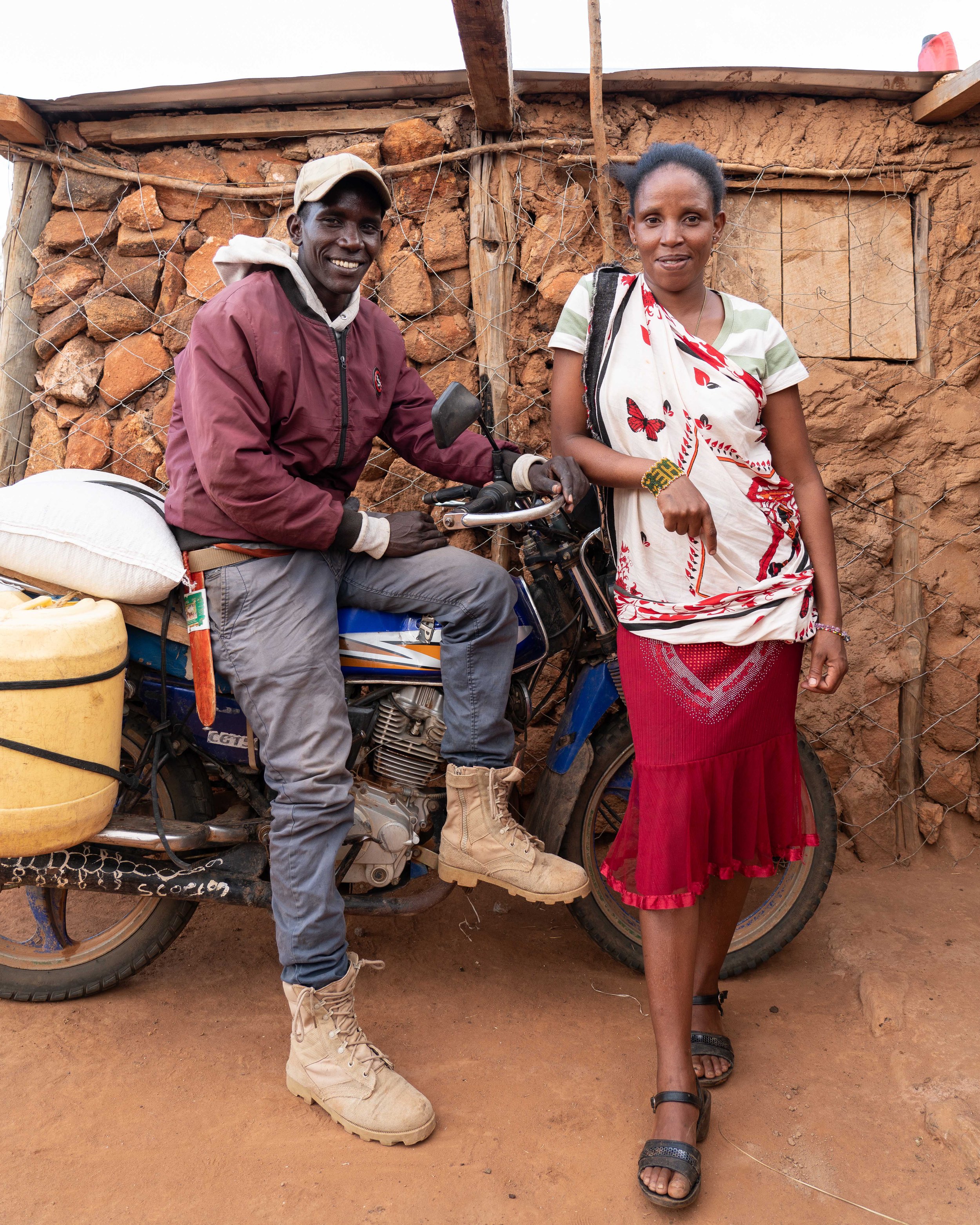
Eustine and Peter at home in Soit Narok village
So when Eustine's labor turned difficult, the people around her were prepared. The money was already set aside, and it was her mother-in-law who recognized that it was time to seek more advanced care. Eustine delivered a healthy baby girl by cesarean section, and both the mother and daughter are doing well.
As Eustine described her experience, “I used to deliver at home, but this time I went to the hospital. My mother-in-law, who is a traditional birth companion and had received similar training, insisted that I go to the hospital after seeing the pain I was in.”
Eustine's safe delivery wasn't luck. It was the result of three people equipped with the knowledge to make the right decision.
That is the whole idea behind how we've built our maternal health programming at The Leo Project. A woman can receive excellent antenatal care at our health clinic and leave knowing exactly what to do if labor becomes dangerous. But she often returns home to a household where she isn't the one who decides whether she goes to a facility for delivery, or whether there is money for transport. So we don't only work with pregnant women. We engage her husband, and we train the traditional birth companions their families already trust.
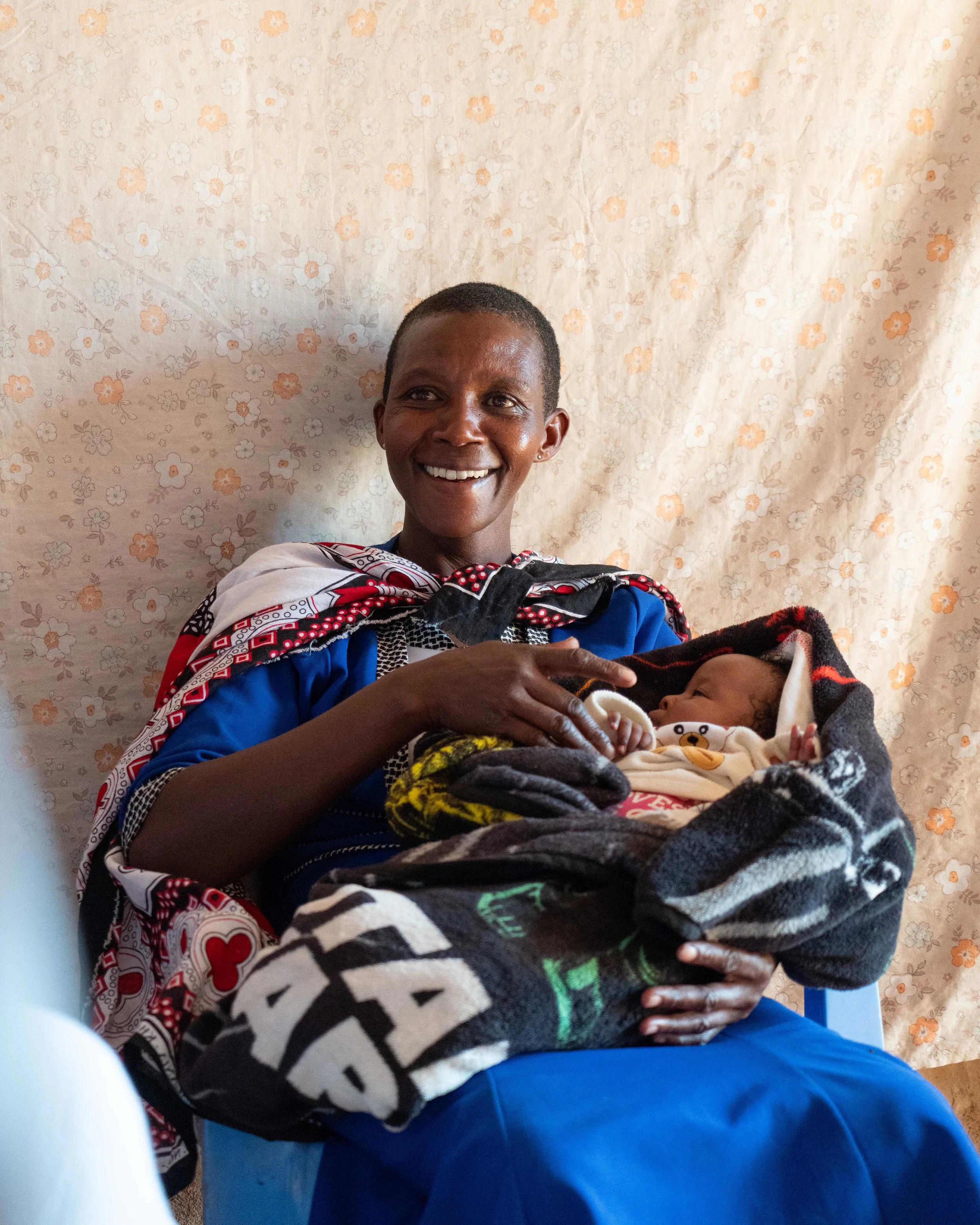
Grace with her granddaughter
Eustine’s story, and the early results from our programming, suggests that this approach is changing behaviors. Across our first two cohorts, we've trained 38 traditional birth companions. Before the training, nearly one-third said they would manage birth complications on their own. Afterward, none did. Roughly 80% said they would immediately refer a woman to a health facility when complications arise, while the remainder said they would call a trained colleague for support. All 38 TBCs completed the training able to recognize prolonged labor as a danger sign.
Of the 14 women in our first group antenatal cohort, every participant finished the program knowing where to turn for help, up from just half at the start. And, among the first 18 men to complete our ANC for fathers program, the share regularly saving for delivery costs rose from 61% to 89%. Reflecting on the training, Peter said, “Before the training, I used to make most decisions on my own without consulting my wife. After the training, I realized how important it is to involve her, especially in health matters and other key family decisions.”
These are small first cohorts, but Eustine's story, and her healthy baby daughter, is the outcome we’re building toward. And, in order to provide a full continuum of maternal, newborn, and child health care for families, we are building an in-patient maternity hospital adjacent to the health clinic, ensuring that women like Eustine have greater access to advanced healthcare. Although Eustine was able to reach the National Teaching and Referral Hospital in Nanyuki town, the 18km (11 mi) journey is costly and difficult over rough terrain, making it inaccessible to most.
The Leo Project hospital will fill a huge gap in this regions and will include prenatal and postpartum care, labor and delivery suites, emergency C-section capabilities, and a neonatal intensive care unit (NICU) for high-risk newborns. A dedicated maternal emergency department, along with advanced imaging and diagnostic services, will further support safe and effective maternal healthcare. At The Leo Project, we are building an ecosystem care to ensure every woman and child has a safe delivery.
Our Group ANC programs for mothers and fathers and our annual Traditional Birth Companion training are supported by the Stavros Niarchos Foundation (SNF).