
Meet Joyce: TLP’s Lab Tech Behind Every Diagnosis
Joyce Macharia has been a lab technologist for over fifteen years, but her entry into this work began when she was just a child. From a very young age, Joyce was exposed to a world beyond her and was always encouraged to participate. “I was fortunate enough to be in an environment where I would ask questions and I would get the answers,” she reflected.
The curiosity that was encouraged in her as a child evolved into a deep love of science which led her to a career behind the microscope, figuring out what is making someone sick and really seeing them. From as early as Joyce can remember, she wanted to know what was actually happening inside the body. “I wanted to know what makes a human, what cells are in a human being,” she said. “I wanted to see what bacteria looked like. ‘Is it this big monster in the body or is it something so tiny?’”
That question: “What is actually happening inside the body?”, is one she answers every day at The Caitlin O’Hara Community Health Clinic.
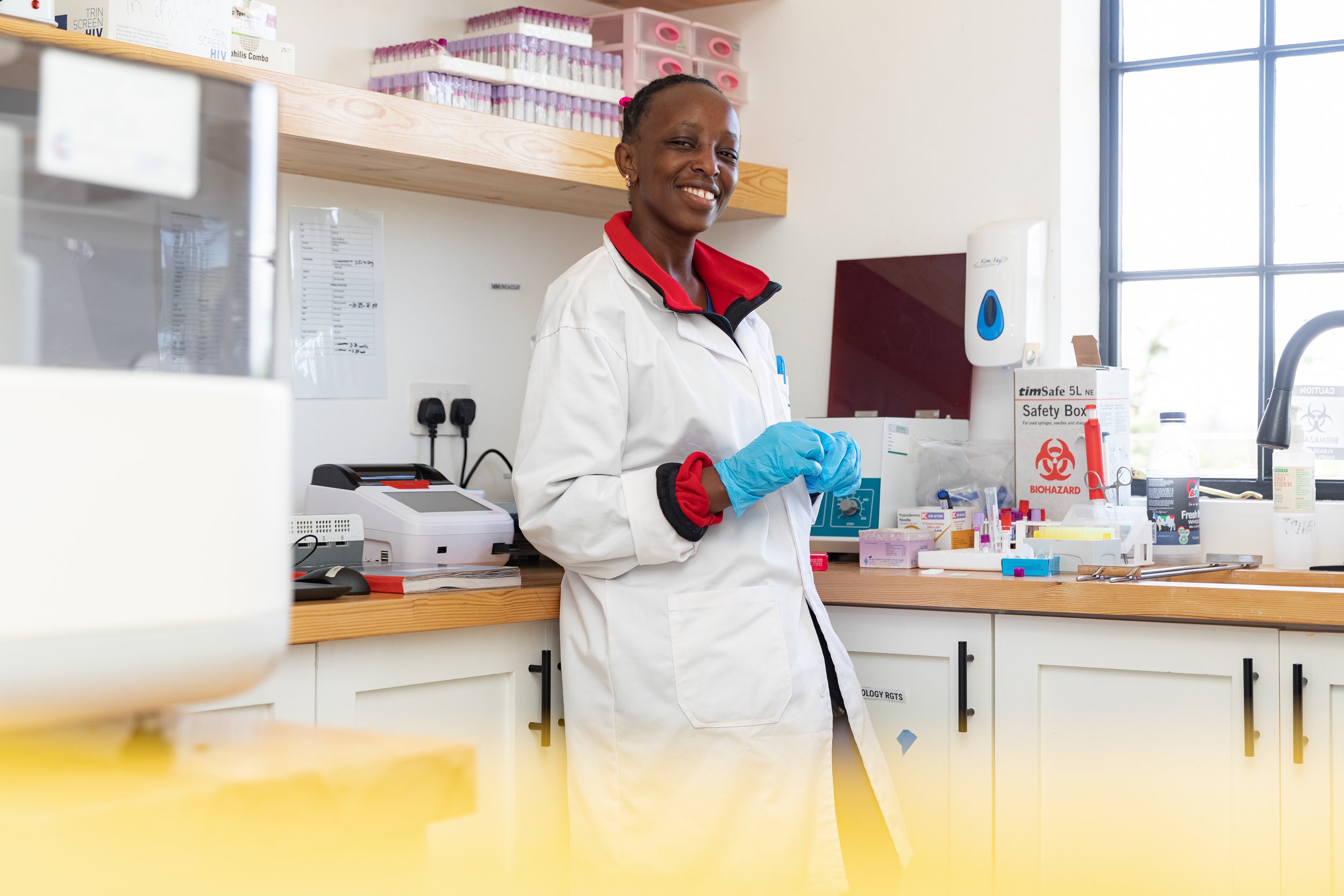
Joyce in The Leo Project lab
Joyce was drawn to TLP by the idea of bringing affordable, accessible care closer to the people who need it but lack it. TLP’s lab is licensed as a “Class E” facility in Kenya, offering a level of diagnostic care that only exists in Nanyuki town, which, due to distance and cost, is not accessible to the vast majority of people living in this more rural setting. Joyce’s expertise paired with our well-equipped lab means that patients visiting the health clinic can be properly diagnosed and treated. As Joyce plainly puts in, “without the lab, there is no medicine.”
Despite how essential her role is, Medical Lab Techs like Joyce are rarely the ones thanked. Perhaps because she was raised around people who always saw her, Joyce says, “I like working behind the scenes. I don’t have to be seen, but just the sense of someone - somebody’s life being changed - even without them acknowledging me, is enough for me.”
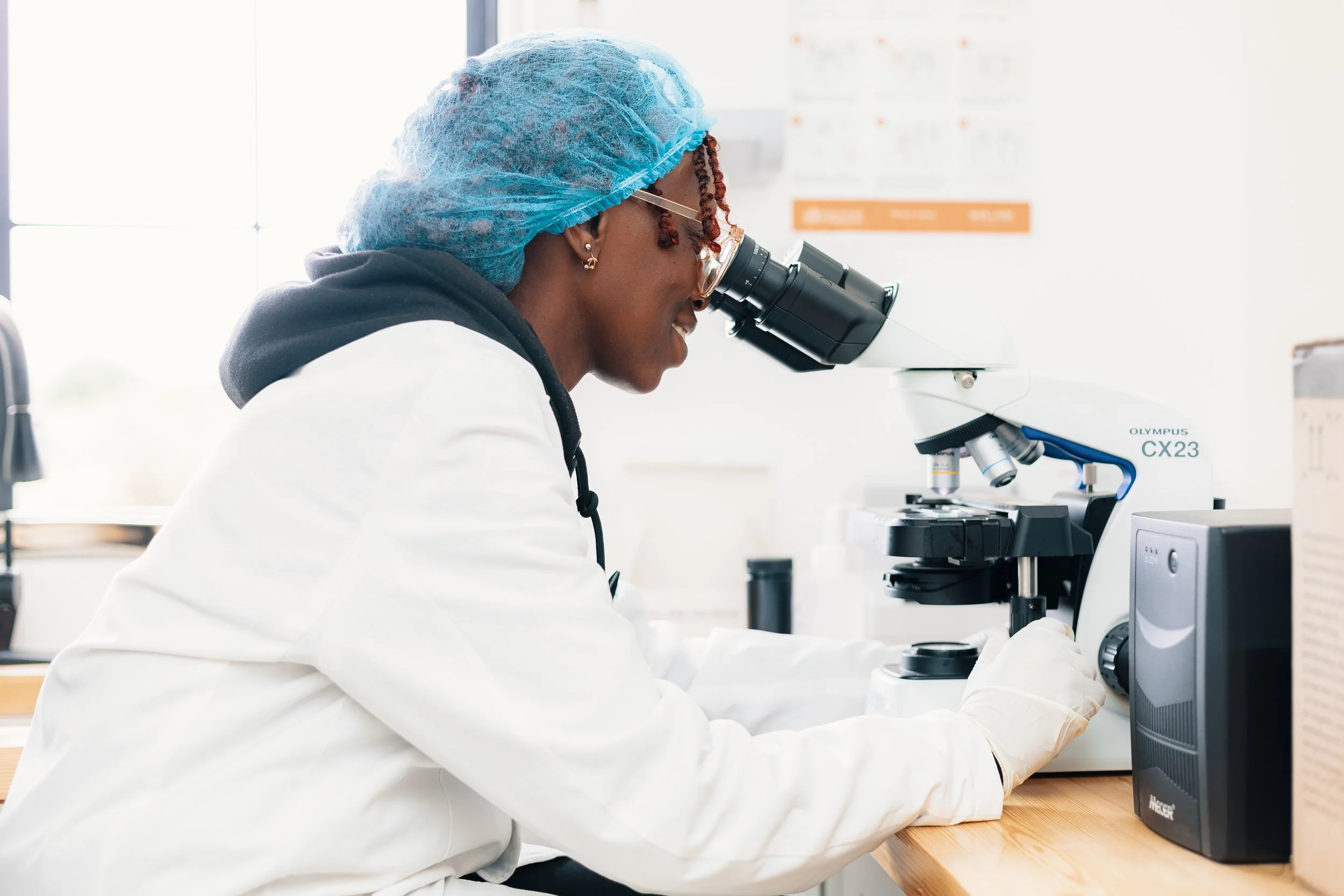
Although Joyce is often behind the scenes, there are times when patients do recognize her role in their care, and those moments stay with her. She recalls a man who had spent years going to other health clinics and hospitals trying to get answers for his chronic pain. When he came to The Caitlin O’Hara Community Health Clinic, Joyce found H. pylori along with a joint issue nobody had caught before. Having found the answers, the clinic team could now address his problems.
Weeks later, he brought a friend in for care and found Joyce. “I came here and you saw my issue. I am so grateful,” he told her, adding “this is the place where I got healed.”
Joyce thinks about that moment often. “It made me so humble and so happy that I was able to change somebody’s life, health-wise.”
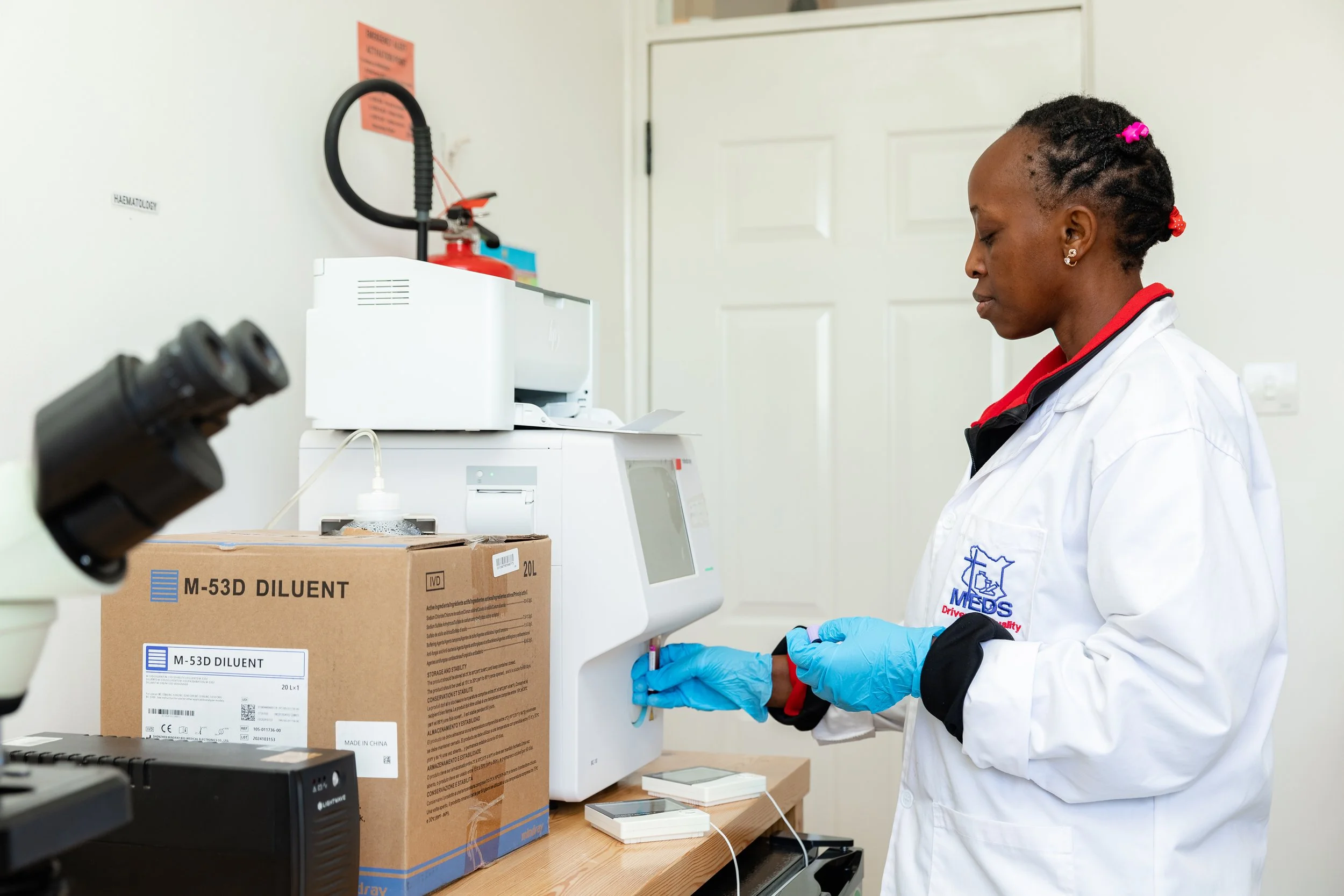
Joyce working with TLP’s hematology machine.
That patient’s experience is what Joyce gives people every day, whether they know it or not. She looks closely, she sees people through her microscope, and finds out what is making them sick. But Joyce is quick to point out that what she does in the lab is only a piece of the bigger picture here at the health clinic. “It starts from the person at the gate, welcoming you and showing you where the clinic is. Then you go to the reception and you’re well-received. You go to triage, then your doctor calls you in and you’re able to give your story, then you come to me.”
She explains that at TLP, patients are never just handed medication and told to leave. Rather, we provide a healthcare experience in which nutrition and mental health services are incorporated into care when necessary. “It’s a holistic healthcare” she explains. “We tell people how to manage their lifestyle and what to do to prevent such occurrences from happening again.”
When Joyce thinks about the future, she thinks about the progress and discovery that she can be a part of. “Science never ends,” she says. She hopes that many other curious young people will follow her path. “Being a lab technologist is one of the best things anybody who wants to pursue medicine can do, because you see things that doctors don't see.” The Leo Project, and the patients who enter The Caitlin O’Hara Community Health Clinic, are certainly fortunate that Joyce is here to see them.
The Leo Project relies on the support of donors to keep our facilities and programs running.
If you would like to make a donation, you can do so here.